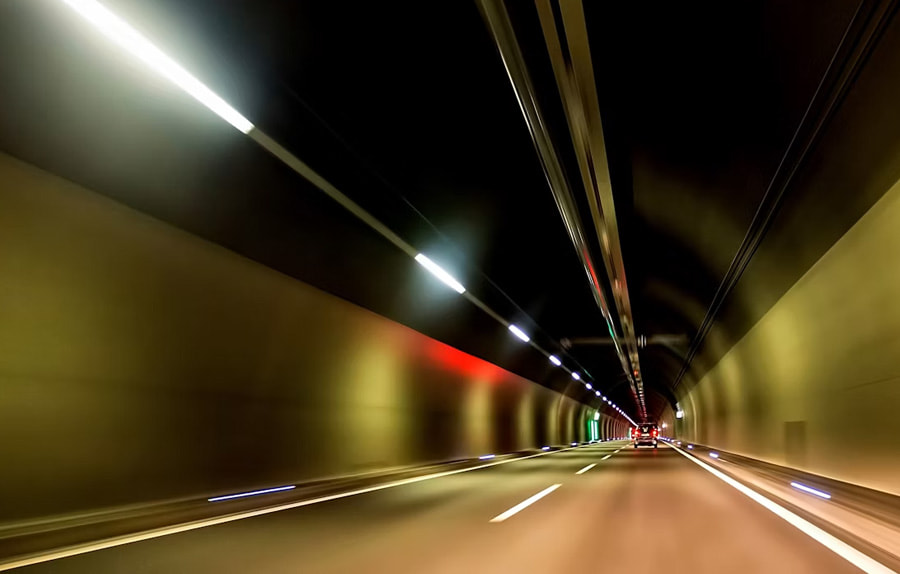
Narrow and enclosed environment, long-distance bus wiring adaptation, segmented fault isolation does not affect overall evacuation.
Industry pain pointsThe overall environment is narrow and enclosed, with long depth distances and extremely poor natural ventilation and lighting conditions;
; The space has a linear structure, and in the event of a fire or equipment failure, it is highly likely to spread to the rear section and affect the entire line; The signal attenuation of long-distance wiring is significant, and the stability of traditional line networking is poor; The evacuation direction of personnel is single, and the route must be strictly planned according to the direction of travel, without confusion in guidance.Ximu Adaptation ProductsLong distance bus transmission lighting fixtures, segmented isolation controllers, anti-interference emergency power supplies, linear channel dedicated evacuation sign lights, signal enhancement modules..
Implementation PlanSegmented circuits are divided along the tunnel and rail transit channels, using long-distance bus networking and signal enhancement equipment to ensure stable transmission of long-distance signals.. The system is equipped with a segmented fault isolation mechanism. If a certain section of the line or lighting fails, the fault area will be automatically isolated, and the front and rear section systems will operate normally without interrupting the overall evacuation work. After the fire broke out, the lighting fixtures were uniformly directed towards the direction of the safety exit, and emergency lighting was lit throughout the entire process to guide personnel to evacuate in an orderly manner along the route.
Solution ValueSolve the problem of long-distance networking in narrow spaces, with stable signal transmission and strong anti-interference ability; The segmented isolation design significantly improves the system's fault tolerance, and a single point of failure does not affect the overall situation, fully adapting to the fire evacuation needs of special narrow buildings such as tunnels and rail transit.




 WeChat Customer Service
 Weixin Channels
 WeChat Official Account